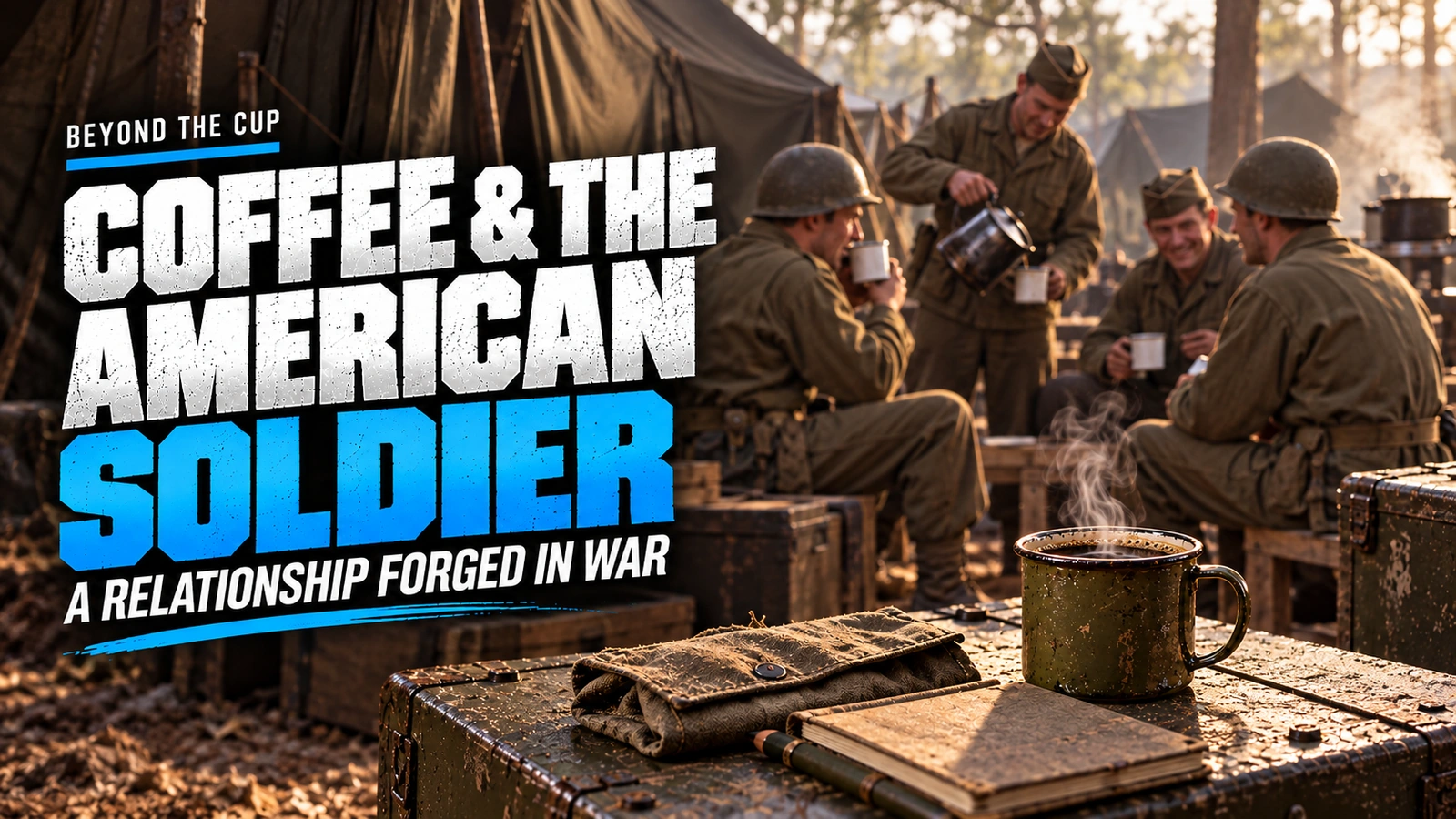
Long before coffee shops appeared on nearly every American street corner, American soldiers were roasting coffee over campfires.
Coffee followed American troops into camps, across battlefields and eventually into military rations.
For generations of service members, it became more than a drink.
It became part of military life.
The Army Chose Coffee
One of the most important moments in that relationship came in 1838.
The U.S. Army eliminated the traditional alcohol allowance from its standard ration and replaced it with coffee and sugar.
That decision helped establish coffee as a regular part of an American soldier’s daily ration.
During the Mexican-American War, soldiers were issued green coffee beans.
That meant making a cup required considerably more work than opening a package or pushing a button.
Soldiers had to roast the beans themselves, grind them and then boil the coffee.
Even under field conditions, they did it.
Coffee and the Civil War
By the Civil War, coffee had become enormously important to Union soldiers.
The Union Army committed roughly 36 pounds of coffee per soldier per year.
Soldiers brewed it in camp, before marches and after long days in the field.
Diaries and letters from the period repeatedly mention coffee.
One soldier writing in 1862 described it simply:
“It must be the coffee.”
That short sentence says quite a bit.
Coffee provided caffeine, but its importance went beyond stimulation.
A hot cup offered warmth, routine and a small reminder of ordinary life in an environment that was anything but ordinary.
War Changed the Way Coffee Was Made
By World War I, another problem emerged.
Traditional coffee wasn’t always practical near combat.
Roasting, grinding and brewing required equipment and time. Fires could also create smoke and light that soldiers didn’t necessarily want advertising their position.
Soluble coffee offered an answer.
According to the U.S. Army Quartermaster Museum, military demand for soluble coffee became so significant during World War I that the Army effectively took control of the country’s available production and encouraged manufacturers to increase supply.
Coffee hadn’t disappeared from the battlefield.
It had adapted to it.
Coffee Goes to World War II
By World War II, coffee was firmly embedded in American military culture.
Versions of American field rations, including the K ration, incorporated coffee.
At the same time, Americans at home were being asked to conserve resources for the war effort.
Civilian coffee rationing began in November 1942.
For many Americans, that rationing reinforced something service members already knew:
Coffee had become part of the machinery of everyday American life.
Different Generation. Same Cup.
The way soldiers make coffee has changed dramatically.
Green beans roasted over campfires became ground coffee.
Ground coffee gave way to soluble coffee in military rations.
Modern service members now have access to everything from instant coffee and field rations to coffee shops on military installations.
But the purpose of that cup hasn’t changed much.
Warmth.
Alertness.
Routine.
Camaraderie.
A few minutes of familiarity before whatever comes next.
Across generations, American service members have gathered around coffee before missions, after long days and during the rare quiet moments in between.
Different generation.
Different battlefield.
Same cup.
At Saint Michaels Coffee, we respect the history behind that cup—and those who carried it.
For those who run toward danger, and everyone who stands behind them.
Sources
U.S. National Park Service — Mexican War Food
Smithsonian Magazine — How Coffee Helped the Union Caffeinate Their Way to Victory in the Civil War
U.S. Army Quartermaster Museum — Quartermaster Activities in World War I
U.S. Army Quartermaster Museum — Army Operational Rations — Historical Background
The National WWII Museum — historical materials on rationing during World War II